
Start with the washer
Energy efficient dryers are easy to find – you probably have one, you just don’t know how to use it. I’ll let you in on a little secret:
The most energy efficient way to dry your clothes in an electric or gas-heated clothes dryer is…
Make sure the clothes are as dry as possible before you put them in the dryer.
That might sound trite or obvious. But I really mean it – the most energy efficient dryers are simply ones in which the drying cycle starts with as little moisture as possible.
If you took a load of laundry and dumped it in a bathtub full of water, then pulled it out sopping wet, even the most energy efficient dryers in the world would take a long time, and a ton of energy, to dry it out. Conversely, if you wash your clothes in a high-efficiency front-loading washer, and use its fast spin cycle to wring out as much water as possible, even the least energy efficient dryers around – picture that 30-year-old behemoth in a forgotten corner of an unfinished basement – will be able to dry those clothes in short order and with a modest amount of energy.
When I take clothes out of my energy efficient washer, some of them already feel dry to the touch after the spin cycle. Fleece clothes, for example, are so dry you can practically wear them straight out of the washer. Energy efficient dryers are sometimes the people walking around your house!
The bottom line: evaporation through heat is a much more expensive way to remove water from laundry, than good old fashioned centrifugal force. So there’s the secret to energy efficient dryers: an excellent spin cycle in your washer.
If you start with a washing machine that does an outstanding job of spinning your clothes so that as much water as possible is extracted, chances are that even with your old dryer, the amount of energy you use overall for laundry will fall dramatically. Not only are front-loading washers more efficient in terms of the amount of water (and therefore hot water) they use, but their spin cycle extracts 2-3 times more water than most top-loaders do, so an inefficient dryer with a high-efficiency washer is a much better combination than a high-efficiency dryer with an old top-loader.
Clotheslines and drying racks – the most energy efficient dryers around
If you really want to find the most energy efficient dryer, it’s right there above you for an average of twelve hours every day. And if you do use a high-efficiency washer with its high speed rinse cycle, the sun can dry those well-wrung-out clothes in no time at all.
Clothes that are routinely hung out to dry on a clothesline (or a drying rack), will outlast clothes routinely dried in a hot dryer, because the heat weakens and even breaks down fibers, especially synthetics and elastic fabrics. So you save money on your socks and underwear as well as on energy. Your clothes will smell better – laundry fresheners or fabric softeners just can’t compete with that fresh smell of laundry dried on the line. And of course you can’t beat free energy when you’re trying to save money – the sun does all the work and doesn’t charge you a cent.
Don’t worry about what the neighbors think – chances are most of them grew up with clotheslines in their neighborhood, even if they haven’t seen too many clotheslines lately. And chances are half of them are waiting for someone else to start using a clothesline before they do. Do you want to save energy? Or are you too afraid of what the Joneses think!?
In my home province of Ontario, many new subdivisions that went up between the 1980’s and the early part of this century, passed anti-clothesline laws, apparently because some people felt airing laundry in public was unsightly. Fortunately, in 2008 the Ontario government overturned all these suburban covenants, making all of them null and void. Why? Because the Ontario government saw, as many other governments are beginning to see, that saving energy is a critical challenge that requires both personal and government involvement. So even if clotheslines are against your local by-laws or subdivision covenants, take heart – your provincial or state government may follow Ontario’s lead and repeal any bans on clotheslines.
Stormy weather
As I write this, from the cloud forests of Monte Verde, Costa Rica, I realize that line drying sometimes just isn’t up to the task. Our hotel host tells us that last October and November there were nonstop torrential downpours, night and day, for 38 days straight. Our own swimming suits, which we used two days ago and which have been hanging out to dry ever since, are still almost as wet as when we climbed out of the pool. So if you live in a really wet climate, an electric or gas-powered dryer is hard to live without. And in a cold climate it can take days for clothes to dry outside, and you may not have the room for an inside clothesline or clothes drying rack.
So, if you have to have a clothes dryer, what kinds of energy efficient dryers are there to choose from?
Gas vs electric dryers
I used to be pretty keen on natural gas dryers, rather than electric. Natural gas dryers are very efficient because natural gas is burnt inside the dryer to produce heat. Upwards of 80% of the energy released when the natural gas is burned, is available to help dry the clothes. If your electricity comes from fossil fuels, then electric dryers are much less efficient, because the typical peak efficiency of a fossil-fuel-powered generator is about 35-40% (for coal), or close to 60% for natural gas, and there are transmission losses of 2-5% as the electricity is moved down the electrical wires. So at best, an electric dryer only uses about five eighths of the original fossil fuel energy; the other three eighths are lost in translation. At worst, as little as a quarter of the energy may get used in the actual drying. This is why electric drying – and in general, any form of electric heating – tends to be much more expensive than the equivalent using natural gas.
On the other hand, if you have signed up with a green electricity supplier, and you have a high-efficiency clothes washer with a very fast rinse cycle, and you dry everything you can, weather permitting, with a clothes line or clothes rack, then I think an energy efficient electric dryer is the better choice to finish off the drying or tide you through a rainy spell. It may cost you more to operate than a natural gas dryer given the same inputs, but if the clothes start off almost dry, the energy you need for the electric dryer is so small you’ll barely notice the cost. And an electric dryer (again, if you buy your electricity from a green energy supplier), means you’re reducing your carbon footprint compared to using a gas dryer.
Another advantage of electric dryers is that you can use an energy saving dryer vent, during the heating season, to return some of the exhaust heat from the dryer to your home. You can’t do this for gas dryers because the exhaust heat contains the combustion gases from burning the natural gas, which could poison your home. But if your home is naturally dry in winter, directing some of the electric dryer exhaust to an energy saving dryer vent (which vents part of the heat through a lint filter back into your laundry room) can keep a portion of the heat in the house, and raise the humidity level as well.
Best energy efficient dryers
Maybe this is what really brought you to this article – you’re wondering what the most energy efficient dryer is on the market today. The US Department of Energy (Energy Efficiency and Renewable Energy office) rates appliance energy efficiency, but does not rate dryers because all electric dryers of a given size use just about the same amount of energy, as do all gas dryers. The Canadian Office of Energy Efficiency does rate dryers, but for example, their electric dryer ratings vary only between 950 kWh/year (least efficient) to 898 kWh/year (most efficient). As pointed out above, electric dryers where the electricity is generated from fossil fuels use a lot more than gas dryers.
When shopping for an energy efficient dryer, look for these features:
Correct size for your usage: If you plan to do lots of small loads of laundry, don’t get a large dryer. A large dryer that is mostly empty will waste energy. On the other hand if you wash a lot of laundry all at once, get a large dryer. Stuffing a small dryer too full will use a lot of energy but the clothes won’t tumble around enough to dry much.
Look for a humidity detector: Good dryers have a humidity sensor that can tell when clothes are dry, and that shuts off automatically once no more humidity is detected.
Look for a cool-down setting: A cool-down setting continues to operate the dryer and blow in air without providing heat. This is intended to keep the clothes tossing and prevent creasing, but the air continues to dry the clothes a little with no heat energy required.
Other efficiency tips for drying your clothes
If you are going to dry your clothes (or some of them) with an electric or gas dryer, these tips can help cut your energy costs:
If you use an electric dryer you can install a dryer vent heat recovery kit between the dryer and the outdoors. These units allow some of the exhaust air from the dryer, along with the heat, to be vented into your home instead of to the outside, while capturing the lint inside a lint filter in the kit. Danger: Do not use these kits with a gas dryer. Also note that while these kits can help keep heat in your home in winter, lowering your heating costs, they of course add humidity to the air of your home. That may be just what you need if it’s a bitterly cold day with very low humidity, but if it’s a dreary, rainy November day the extra moisture from a dryer vent heat recovery kit can only make the humidity in your house worse.
Use an energy efficient dryer vent: does cold air sneak into your house in winter through the outdoor opening for your dryer vent? (It may well leak in even without your noticing – check for unusually cold air underneath or behind your dryer.) I recommend the Heartland dryer vent seal, which prevents air leakage and keeps rodents and other pests from getting into your home. This product gets great customer reviews, especially from people who initially tried (and then gave up on) an off-the-shelf dryer vent seal from Home Depot or another retailer. You can get it from Amazon.com, often for under $20.
Keep the lint filter clean: Clean the lint filter after every load. A full lint filter slows down airflow, reducing the effectiveness of the heat provided for drying, and increases the work the motor has to do to pump the hot air through the dryer drum, thereby increasing electricity consumption.
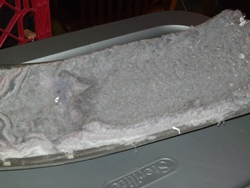
Dryer lint wastes energy
Check the exhaust tubing and outdoor vent for lint build-up: Periodically check the exhaust tubing of your dryer, and the outdoor vent, for any lint that may have built up in elbows or at the vent point. One symptom of this happening is if the door of your dryer, where the gasket meats the dryer body, feels wet after a load and the load takes longer than normal to dry. This usually indicates that the exhaust fumes aren’t getting out fast enough – the moisture is staying in the dryer instead of being vented.
Never do partial loads: The most energy efficient dryers around are still going to waste energy if you run them nearly empty. Plan ahead. It’s better to do two medium loads than a big load followed by a small one.
Use body heat to finish drying: If you’re trying to dry something right away because you have to wear it now and can’t wait for it to line dry, try putting it on damp. This is standard practice on canoe trips, where there’s plenty of rain and there are plenty of soakers, and there are no electric or gas dryers – human bodies make the most energy efficient dryers in that situation, and your body heat usually dries out damp clothing in an hour or less. Of course, don’t try this if it’s freezing out – you don’t want to catch hypothermia! But in balmy weather the wet clothes can actually cool you down pleasantly while they dry. Remember, evaporation is a cooling process.
Use a towel press to extract water from items that can’t be spun: A towel press is a simple technique for getting water out of clothes that are too delicate to spin in the washer. Spread a large bath towel on a clean floor surface, place the item to dry in the towel, fold edges in as much as possible to cover the item, then roll the towel up. Stand on the towel in bare, clean feet. The pressure of your feet will press water out of the delicate item and into the towel. You can then dry the item on delicate in your dryer using much less energy than if you put it into the dryer wet; the towel can be hung out on the line to dry.
Use a sweater drying rack for delicate items: Hanging delicate items on a clothesline can stretch them badly, and you probably wouldn’t dream of drying a wool or cotton sweater in the dryer, even just on air. We used to dry sweaters and other delicate items by laying them on a towel over a flat surface (like the basement floor!), but doing this means poor airflow and the items take a long time to dry.
Sweater drying racks allow you to dry several sweaters at a time in a small space, and keep air circulating around the items. For faster drying you could place a small fan by the rack and blow air on the drying clothes.

When using an electric clothes dryer you are always removing conditioned air from your home whether it be heated air or cooled air. My question is if you have a laundry room with a window, is it better to open it a little to pull some outside air in to dry the clothes? I wish they made dryers with an air input port.
If you open the window in the laundry room, then outside air will only be drawn into the laundry room to make up for the exhaust air from the dryer. This means that over the course of a drying cycle, the temperature and humidity in the laundry room will tend towards the outdoor temperature and humidity fairly quickly. The closer to outdoor temperature and humidity the laundry room is, the less heat (or air conditioned air) you are losing by exhausting indoor air and replacing it with outdoor air. If you leave the window closed, then the exhausted air will be pulling outside air in through whatever air leaks you have throughout the house, and it will take longer for the whole house to reach the outdoor temperature and humidity (it probably never will, because the furnace or AC is running and because the dryer won’t run that long). So you’ll use less energy if you have a window open in the laundry room than if you don’t – as long as you remember to close it when done.
In my house I have a vent with a flap on it next to the laundry room. When the dryer or the hot water heater creates negative pressure by exhausting air outside, the flap opens and lets cool air in. Otherwise the flap stays closed. That is more efficient than leaving the flap open all the time, and certainly better than relying on air leaks to replace the air being exhausted.
Note that if you buy an electric heat pump dryer, you don’t vent at all, which is one of several ways heat pump dryers achieve much higher efficiency than regular electric dryers.